Teaching
In my fifteen years of teaching experience, I have designed and taught courses at undergraduate and graduate level for universities in Argentina, Spain and the United States. Currently, I have taught courses on sociology of public health, medical sociology, health systems in Latin America, social welfare, political sociology, research methods, and social theory.
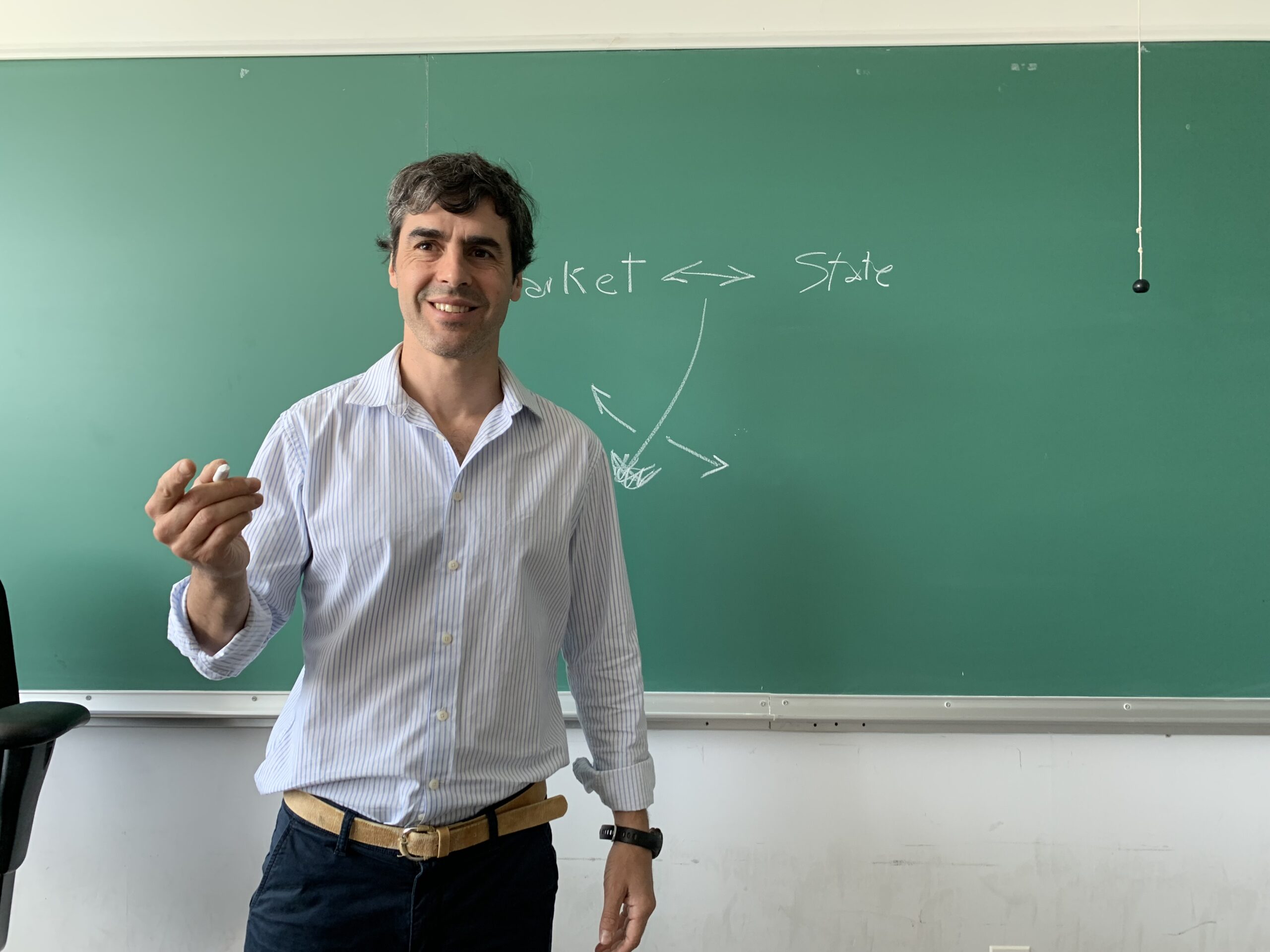
My main goals as an instructor is to provide students with the tools to analyze society, to present them with different perspectives on social problems, and, ultimately, to help them envisage pathways for social change. I am a strong advocate for active learning. Students learn much more when they make emotional connections to the subject and when they take an active role in appropriating the new knowledge. I strive to encourage students to learn in a collaborative way, by teaming up for group exercises, exchanging opinions about the material, and offering higher-order assignments to resolve real-life problems.
My ideal teaching session at the college level involves a dialogue with and among students, with a thorough discussion of the assigned materials, and a strong wrap-up section at the end, in which I emphasize the main concepts and ideas visited in class and weave in students’ interventions in an integrated conclusion.
In 2016, I was appointed by the Masters’ program in Public and Social Policy offered jointly by the Universitat Pompeu Fabra (UPF, Spain) and the Johns Hopkins University (JHU) to design and teach the course Structure of the State and Welfare Policy in Latin America. The content for this class stems directly from my own research on health and welfare policies in Latin America. Exploring, understanding, and interpreting these developments in 21st century Latin America has been my passion over the last decade, and my classes are filled with this passion.